reasons why you should list your home with us
Conventionally, house owners had handful of means of marketing their home for rent or sale. These kinds of preference largely consisted of real-estate agencies, newspapers, or flyers. Nevertheless, the age of computers, PDAs, and smart phones has given an extensive variety of alternatives to those aiming to publicize their properties. There are numerous merits to this recent technology when it comes to renting or selling your property.
Lots of people are searching online for their new home. Although in the past, online property advertisement might possibly have been restricted to real estate sites; modern times have witnessed the growth of various other selections for users. These websites vary from simple free services, to sites providing much more alternatives for a little fee.

Benefits of accurate pricing your home when listing to sell
Most home sellers would like to get the best possible price out of a sale, but if the price is put too high then it can cause reduction in the offers that come for the home. Even if you are willing to take less, prospective buyers may not even come to the bargaining table which can make the process of selling the home difficult.
The reason why property pricing needs to be done accurately can be understood from this example. A seller decides to price a property a bit higher than the market price, in the hope that he can get a profit, even if he is ready to accept a lower price. The marketing of the property starts and the property is listed with all the other properties around the same marketed price. Now, when a buyer decides to buy a home that is worth that market price, he pulls out a list of all properties being sold within that range. On comparing the amenities available in each of the homes, it will be seen that the home does not offer all the benefits, as compared to other homes of that amount. Thus, the buyer may ignore the home and look for something with better facilities in the same range.
Similarly, when a buyer is looking for a home within a particular range, he will look at properties up to a few thousand dollars more than his set price. Even with the added amount, the cost may not be equal to the price you have quoted. This can prevent your home from appearing in searches of various prospective customers. With this overlooking of your home, it could get quite difficult to make a proper sale.
As a result of this oversight, your home may appear to be stuck in the market for a long period of time. With a growing list of houses available for sale, property listings do tend to get stale in a very short time period. It is seen that a listing generates the maximum interest within the first 2 or 3 weeks, since it was placed. When homes appear to be in the market for a longer period of time than usual, then the buyers can get quite hesitant when it comes to buying it, just like a store where new release of a product leads to the maximum interest, which begins to die down as time passes. This can even cause you to sell your house at a much lesser price than you earlier intended to.
To get the right price for your property, a fair amount of research is required to give you an idea. To ensure you get an amount closer to your asked price, you must show your home to the maximum number of buyers and get a larger amount of offers. This will help you to get enough profit from the sale. The best way to get a decent amount of profit is by placing your asking price within 5% of the market value. This will ensure that you have ample inquiries regarding your offer and will allow you a chance of getting a good deal to rise significantly.

How to negotiate home repairs with your home buyer
A home inspection is a look-over of a property in connection with its sale. As soon as you obtained the inspection report, you should determine the problems that the seller should repair and the features that you are likely to accept as is. However, after home inspection, negotiation comes in. Negotiating your way in term of the things you and the seller want and need depends on the skill that you have. A good negotiation generates good results from both parties and ensures that you pay a fairPrice. It also equates to how a seller may not be able to cheat you in terms of pricing and the available facilities.
Final negotiations often occur following the scheduled inspection. This involves asking the seller to make more or fewer repairs and asking the seller to lessen the sales price. Indeed, negotiating is not an easy process. But once a proper negotiation is made, the effort is all worth it. Usually, there are things that you should know about negotiating and finally deciding on a deal. You need to be careful and conscious of the deals being made. If the existing transaction puts you off, say so. You should also note about the loan and any existing mortgage that you parley with your bank.
A seller's responsibility is to tackle property defects that are listed in the advertisement contact or mandated by local and laws. If the purchase contract details everything in its actual condition, repairs and all, a seller may decline to accept your repair requests or to adjust the price range. Legalized exemptions may be integrating well-built water heaters for safety from seismic earthquakes, providing smoke alarms at specific areas, or updating plumbing devices for water preservation. Other than those requirements, there is always the completion of sale contingencies based on no matter what is acceptable between you and the seller.
The present condition of the property is acknowledged only subsequent to the home inspection either carried out by you or your hired home inspector. Your hired home inspector's description of the house will surely be valuable information in order for you to make the home seller aware of the property deficiencies that need to be repaired. Also, you can ask the seller to reduce the price for this reason. You can take matters in your own hands the fixing and refurbishing of the house especially if you have already negotiated this deal and the seller refuses to budge.
Furthermore, this enables you to gauge the real worth of the property and make you negotiate appropriately. For this reason, it is recommended that the preliminary sales offer be reduced instead of what you really intend to pay for. Ensure that you appraise the real estate market and note the current sales of similar types of properties. This will give you an idea as to how much you can haggle on the final price. The art of negotiating involves enabling the seller to do what you want, although only on mutual standards. You can also allow some points the seller makes which is a good way of negotiating.

3 Things you need to check to make sure your home buyer is well qualified to buy your home
Like when you construct a building, you need to go through a step by step process. That also goes the same in home buying or property investing. Pre-qualification process is the first step that you need to consider when you plan to buy your dream house. This builds the foundation for buying real estate properties that provides approval to the buyers. Such approval influences your decision whether you are capable to pursue your plans or not.
The approval is a strong factor in determining the success of this venture. This will be given by the lender and you need to show this to the seller and your broker to prove that you are capable of paying your mortgage. Once you hold such proof, this will strengthen your standing in any lending institution and to other people involved in real estate investment. If you are approved in the pre-qualification process, you are a step higher than other buyers who have not gone through the procedure.
Aside from that, another advantage that you can enjoy when you are pre-qualified is you can easily manipulate the negotiation process since you are confident enough. The haggling of prices will be a lot easier since the seller and broker are also secured that you have the ability to buy the house. You are given the certification saying that your loan is approved and you are eligible to acquire a property under certain terms and conditions. Your credit standing is also improved if you take hold of the certification letter. And the nice thing about this is your interest rates are fixed in a locked-in rate while you are still searching for the right property.
Regardless if you will do the entire home buying process or you are going to seek the help of a broker, the idea of being approved will make the people involved more secured. Any real estate agent will be more confident in dealing with other brokers if he is aware that his client has the ability to purchase a house. In fact, he can gather more prospects for you to choose from since the sellers will also be encouraged to promote their properties to you. It is like you are only a step away from getting your dream house. The broker can also be assured that he is not wasting his time, money and effort in doing business to others since he knows that your loan has been pre-approved.

5 Steps to sell your home at the highest price
Every home seller wants to get the highest price for the sale of their home but how many really know what to do and what not to do to get the most return for their investment? There are many home improvements that can be done. Which home improvements are proven to bring the highest return and which home improvements can be nothing but a money pit? One of the best things to do while getting started is to walk your home inside and out and look at it from the eyes of the buyer. When you pull up in front of your home, does it have great curb appeal? What is the first impression? This is very important to remember because we never get a second chance to make a first impression. Next, walk around the yard and look at the grounds, the plants, flowers and trees. Do they look healthy, green and lively? Is the front and back yard free of debris? What is the condition of the exterior of the home, the light fixtures etc? This is called the observation step of getting a home ready to bring top dollar and it is a very important step when getting started. Now let's take a look at what has been proven to bring a strong return on investment to fix a property to sell.
The number one item is paint! Having good exterior and interior paint has proven time and time again to bring top dollar upon sale. Buyers want a home that looks clean and presentable and there's nothing like a good quality paint job to make a home shine. Studies have also shown that a fresh paint job will speed up the time it takes to sell a home.
The number two item is the kitchen! A great kitchen can mean serious profit when selling a home. The kitchen for many buyers is the heart of the home and therefore a very important area to consider. Changing old fixtures, cabinets and flooring can be a good place to start in the kitchen and can make a significant difference in the way a kitchen looks. If one really wants to bring a great return upon sale, a home seller can change the sink, counter tops and the appliances to make the kitchen look like a center piece. This is a great area because a little or a lot of money can be spent upgrading the kitchen. In general, for every $5,000 spent could bring as much as $15,000 in return.
The number three item is useable space! A good home can become great if it is completely functional and has all useable space. Many times the way a home is laid out can be improved by knocking out a dysfunctional wall, adding a bathroom or a bedroom, or turning a previously unusable room into a room that has a purpose. Look around the home to look for areas that fit into this category and figure out how they can be expanded or refurbished to bring extra value.
The number four item is adding an extra bathroom or upgrading bathrooms! This is a very important area of the home being functional, comfortable and convenient. If the home has two bedrooms and one bathroom, adding a second bathroom will add great value. The average cost to remodel a bathroom with all the bells and whistles is on average $11,000. In most cases this will do more than just pay for itself! It will add a much greater value, make the home more saleable and bring more money upon sale. Another selling point for bathrooms is to make sure there is plenty of light or adding a skylight can bring extra value.
The number five item is adding a redwood deck or enclosed patio! This is a great way to improve the look of the home from the outside. This is also a great way to add extra space and make the home more functional. Many people love to be outside when the weather is nice, barbeque and entertain family or friends. The key to this element is to make sure to use quality materials. This is not an area to cut costs.
There are other things that can be done such as making sure the home is clean, the floors are clean, there is no debris or clutter and there are no leaks in the faucets.

4 Common Mistakes home Seller's make
Selling your home is a business transaction, but all too often, sellers are ill-prepared and make emotional or impulsive conclusions that cost them time, money and emotional stress. If you are thinking of selling your home, you need to avoid the following mistakes:
Personally, I feel the worst mistake sellers make is pricing their homes too high. Buyers are for the most part educated and will not even look at an overpriced listing. Most likely, time forces you to lower your asking price to a more realistic number. The downside of this is that, in the meantime, you have lost valuable marketing time. Once a listing has been on the market for a while, it gets less attention. Bottom line is... pricing your home reasonably right from the start! You can ask your agent to run a comparative market analysis - "CMA" - or complete a broker price opinion - "BPO" - (more detailed than a CMA. Some agents may charge for this service). Better yet, hire an appraiser to conduct a formal appraisal.
Faced with the prospect of having to pay sales commission, it might look attractive to attempt to sell your house yourself. The best bit of advice I ever received from one of my mentors was this "stick with what you are good at and write checks for the rest." Take heed, unless you have extensive experience at the task at hand, pay a professional. Also, the National Association of Realtors estimates that 75% of all buyers are represented by a buyer's agent who looks on the Multiple Listing Service - "MLS" - for suitable properties. Without you hiring an agent, you will not have access to these buyers, and will effectively eliminate 75% of the buyer pool.
Preparing your home for sale involves more than telling the kids to clean up their rooms. You have to realize that potential buyers have totally different taste than you. Try to neutralize your home as much as possible, visit a model home to get some ideas. A fresh coat of paint does wonders. Repair items that are not working, and clean, clean clean. This cannot be emphasized enough. Nothing turns off a buyer more than a dirty, dusty, smelly house.
Most people understand that if you don't let the world know that you have a house for sale you are not going to get very far. The question lies in how to accomplish this. Marketing is more than merely putting up a For Sale sign. Here are some questions to think about: Who is your target buyer? Did you prepare your property for sale? What sets you apart from the competition? Are you offering incentives? What marketing media is available to you? Ask your agent for a copy of their marketing plan and review it.
I cannot tell you how many times I have seen sellers push away prospective buyers because they got triggered, or because they did not understand the offer. Rather than turning your nose up at what you think is a lowball offer, look at every offer and present a realistic counter offer. That way, you can spark a real negotiation. Often, inexperienced sellers feel that they are being taken advantage of when a buyer negotiates hard. You have to remember that real estate is a negotiable commodity. Most buyers want to get the best deal possible and are testing you to find out where you stand. If you are dealing with a qualified buyer just keep moving for what you want, find out how far they are willing to go, let them throw in the towel, not you!
This applies to you and the property. When you're selling your home, ensure it is always available for showings. When it comes to setting appointments, sellers more often than not make the mistake of being inflexible. Qualified buyers are generally professionals who work long hours and have limited spare time. For example, not showing your house in the evening is saying no to a big chunk of your buyer pool. Also, once there is an offer on the table, it is crucial you be available to negotiate the offer, as well as to take care of the little things that will need to be done in the closing process.
You received an offer. You concluded favorable negotiations. Escrow opened, you took your property off the market. You are two or three weeks into the closing process and emotionally, you moved on to your next venture, when, out of the blue, you get a call from your agent saying that the buyer did not qualify. Can you feel the pain? Buyers face strict lending standards, therefore it is crucial you check out the potential buyer's qualifications. The last thing you want is the scenario above. Before accepting an offer, be sure the buyer has been pre-approved, not just pre-qualified. Don't accept offers based solely on price. A cash buyer is more likely to close than someone going for 100% financing. After you have received an offer always keep marketing your property, a couple of backup offers will protect you from having to put your house back on the market if the first buyer fails to close.
Contracts can be complex and confusing. Don't let the fine print scare you. Before you sign and enter into a formal agreement, ensure that all documentation clearly reflects your understanding of the transaction. Review each page carefully with your real estate agent or attorney. Is everything in place? Is there something you don't want? Don't rush. You want to sign off with clarity and eliminate any possible liability.
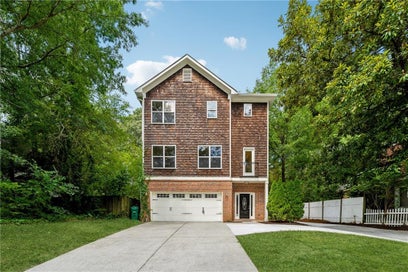
Updated and upscale, this 4 sided brick home is fantastic find in the Brookhaven area (Sexton Woods). Featuring Hardwoods and tile through out, it has 4 bedrooms and 3 full baths plus large area that could be used as media room or large Rec Rom. Large lot has small creek.
Appliances and Washer/ Dryer included
$1,855 per month one year lease
 |
 |
 |
 |
|---|---|---|---|
 |
 |
 |
 |
 |
 |
 |
 |